





Wondering what to do after getting chin filler? The good news is that most people can return to their usual routine soon after treatment. However, your chin may look slightly swollen or feel tender, firm, or uneven during the first few days.
Good chin filler aftercare is about allowing the treated area to recover, avoiding unnecessary pressure, and knowing when a symptom needs medical attention. This guide explains the recovery timeline, sleeping positions, eating, exercise, and the simple steps that can make the healing period more comfortable.
What to Expect After Chin Filler
Chin dermal filler is a non-surgical treatment that can add projection and improve the shape of a weak or recessed chin. Although changes may be visible straight after injection, the initial appearance is not always the final result.
It’s common to notice:
- Swelling: The chin may temporarily look fuller than expected.
- Tenderness: The area may feel sensitive when touched or during certain facial movements.
- Bruising or redness: Small marks can develop around the injection sites.
- Firmness: The treated area may feel tighter or harder than usual.
- Mild asymmetry: Swelling may affect one side more than the other.
These reactions often improve gradually. Recovery depends on the filler product, injection technique, amount used, and how your body responds.
The important thing is the direction of your symptoms: mild discomfort that improves is different from severe pain or swelling that continues to worsen.
Chin Filler Recovery Timeline
There is no exact chin filler recovery aftercare day by day schedule that applies to everyone. Still, knowing what typically happens during each stage can help you plan your activities and avoid judging the results too early.
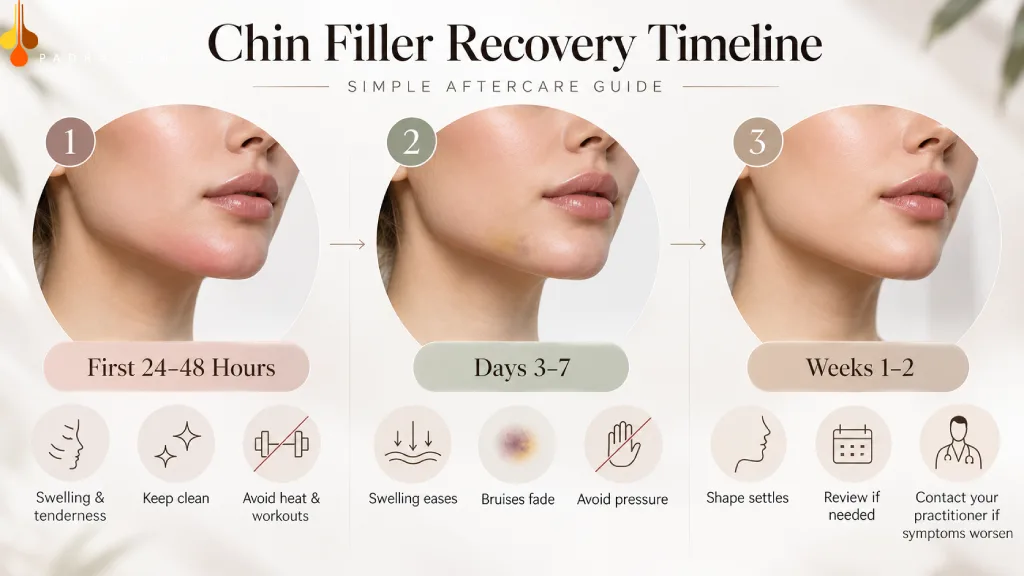
First 24–48 Hours
The first two days are usually when swelling, tenderness, or tightness are most noticeable. The chin may appear more prominent than expected, and small bruises can begin to develop.
During this period, keep the area clean, avoid unnecessary touching, and follow your practitioner’s instructions. Many people can continue routine activities, but strenuous workouts and excessive heat are best avoided.
Days 3–7
Swelling and tenderness should generally begin to ease. Bruises may change colour as they heal, and the chin’s outline often starts to look more balanced.
You may still notice some firmness, particularly when touching the area or moving your lower face. This can be part of the healing process, provided it is improving rather than becoming more painful.
If your symptoms are getting worse instead of better, contact your practitioner.
Weeks 1–2
By this stage, much of the initial swelling has often settled, and the chin’s shape is easier to assess. Firmness and mild unevenness may continue to improve.
Some people need longer than two weeks for swelling or bruising to resolve completely. If a distinct lump, asymmetry, or discomfort remains, your practitioner can assess whether further observation or treatment is needed.
A review appointment may be recommended once the initial healing period has passed.
How Long Does Swelling Last After Chin Filler?
Chin filler swelling is often most noticeable during the first 24–48 hours and gradually improves over the following days. Many people feel more comfortable within a week, although mild swelling or bruising can last one to two weeks or occasionally longer.
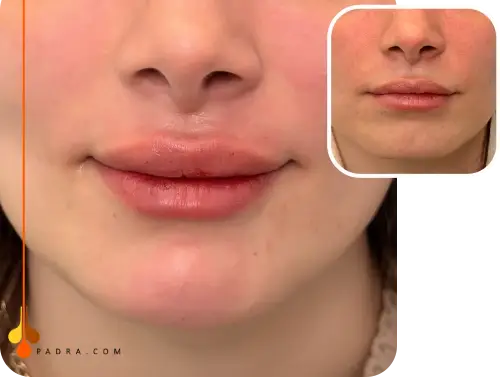
Swelling happens because the injection temporarily affects the surrounding tissues. Some hyaluronic acid fillers also attract water, which can make early fullness more noticeable.
To manage mild swelling:
- Use a cool compress wrapped in a clean cloth if your practitioner recommends it.
- Apply it gently for short periods without pressing on the chin.
- Avoid excessive heat and activities that make swelling worse.
- Ask your practitioner which pain relief options are suitable if you feel uncomfortable.
Never place ice directly on the skin or massage the chin to push swelling away. Increasing pain, marked discoloration, or rapidly worsening swelling should not be treated as routine recovery.
Why Does Chin Filler Feel Firm or Lumpy?
A firm or slightly uneven feeling after chin filler is not always a sign that something has gone wrong. It may result from temporary swelling, tissue sensitivity, or the filler itself being noticeable beneath the skin.
In many cases, this feeling softens as the surrounding tissues recover. However, not every lump has the same cause.
A small area of firmness that is becoming less noticeable is different from a hard, increasingly painful lump or one accompanied by redness, warmth, or unusual skin changes.
Do not try to flatten a lump by pressing or massaging it yourself. Your practitioner needs to assess the cause before recommending massage, observation, or another treatment. Persistent lumps may occasionally require further medical evaluation.
Chin Filler Aftercare: What to Do and Avoid
The most useful chin filler aftercare instructions are usually simple: handle the treated area gently, avoid activities that increase swelling, and follow the guidance specific to your filler product.
Exercise and Physical Activity
Light walking and ordinary daily activities are generally fine after treatment.
However, practitioners commonly recommend avoiding intense exercise for the first 24–48 hours. Running, heavy weightlifting, high-intensity workouts, and hot yoga can increase warmth and blood flow, making swelling or bruising more noticeable.
You should also avoid saunas, steam rooms, and very hot baths during early recovery.
Return to your usual workout gradually once discomfort and swelling are improving, unless your practitioner advises a longer break.
Makeup, Skincare and Pressure
Clean skin gently and avoid scrubbing the injection sites. Once the small puncture points have closed, makeup may be applied according to your practitioner’s advice. Some clinics recommend waiting until the following day.
For the first few days:
- Avoid rubbing, squeezing, or massaging the chin.
- Don’t repeatedly rest your chin on your hand.
- Keep facial tools, exfoliating products, and irritating skincare away from sensitive injection sites until the skin has recovered.
- Postpone facial massages or treatments that place significant pressure on the chin until your practitioner says they are appropriate.
If you take prescribed medication, including blood thinners, do not stop or change it without advice from the clinician responsible for your care.
Sleeping After Chin Filler
Wondering how to sleep after chin filler? Sleeping on your back may be the most comfortable option for the first night or two, especially if your chin feels swollen or tender.
A slightly elevated pillow can help you avoid placing direct pressure on the area. Try not to sleep face-down with your chin pressed into the pillow.
Accidentally turning onto your side does not automatically mean the filler has moved. The main aim is to avoid sustained pressure and follow any specific sleeping instructions from your practitioner.
Chin filler recovery and aftercare food
You can usually eat and drink normally after chin filler, unless your practitioner has advised otherwise.
If chewing feels uncomfortable, choose softer foods for the first day or two and return to your regular meals as tenderness improves. Be careful with very hot food or drinks if the area is still numb from treatment.
You do not need a restrictive diet solely because you’ve had chin filler. Staying hydrated supports general health, but drinking extra water has not been shown to guarantee longer-lasting filler results.
Alcohol may worsen bruising or swelling, so it is often best avoided for at least the first 24 hours, or for the period your practitioner recommends.
Considering Chin Filler?
Explore your chin filler options at Padra Beauty and learn what to expect from treatment, results, and recovery.
Considering Chin Filler?
Explore your chin filler options at Padra Beauty and learn what to expect from treatment, results, and recovery.
When Will Chin Filler Settle and Show Final Results?
Hyaluronic acid chin fillers usually create an immediate change in projection or contour. However, the first result you see includes some degree of post-injection swelling.
For many people, the appearance becomes more settled after around one to two weeks. Others may need longer, and a follow-up assessment is sometimes arranged after two to four weeks.
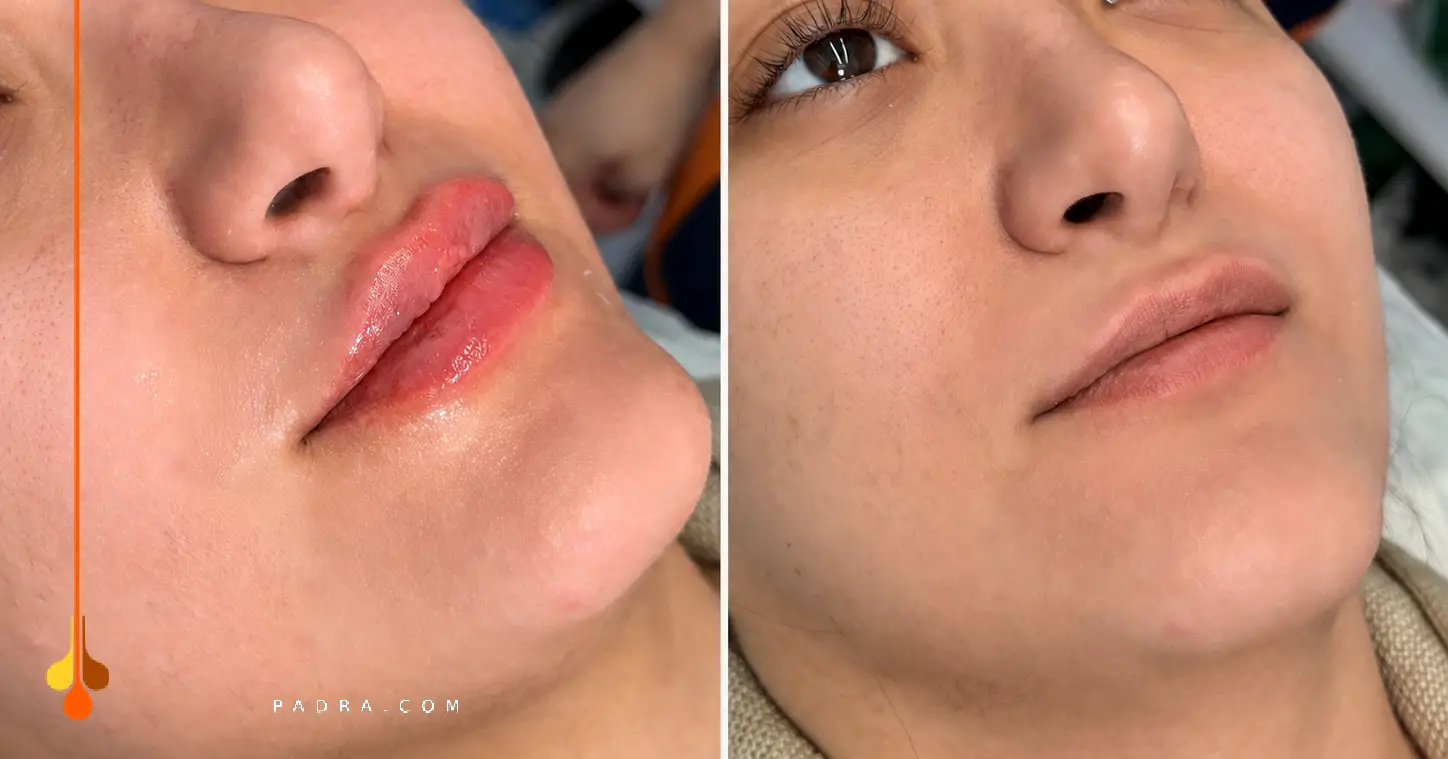
If you are comparing chin filler before and after photos, wait until the early swelling has improved. Photos taken at the same angle, with similar lighting and facial expressions, provide a more useful comparison than pictures taken immediately after the injections.
The treatment’s settling time is different from its longevity. If you’re wondering how long chin filler lasts, the answer depends on the product, amount used, treatment area, and individual response. Results are temporary and may last several months to a year or longer.
When Should You Contact Your Practitioner?
Most post-treatment symptoms improve without intervention, but it’s important to know which changes need attention.
Seek emergency medical care immediately if you experience:
- Severe or unusual pain during or after treatment.
- Skin near the injection site turning white, grey, blue, or unusually mottled.
- Sudden blurred vision, loss of vision, or other visual disturbances.
- Stroke-like symptoms, such as facial drooping, sudden weakness, or difficulty speaking.
- Difficulty breathing or rapidly developing swelling of the lips, tongue, or throat.
These symptoms can indicate rare but serious complications, including a blocked blood vessel or severe allergic reaction. Do not wait for a routine follow-up appointment.
Contact your treating practitioner promptly if you notice increasing redness, warmth, swelling, fever, discharge, or a lump that is becoming more painful. Persistent firmness or asymmetry should also be reviewed, even if it is not urgent.
If you are unsure whether a symptom is normal, contact your practitioner rather than trying to diagnose or correct it yourself.
