








Noticed swelling, tenderness, or a firmer jawline after filler? These changes are common during the first few days. Your jaw may even look slightly wider or uneven before the swelling settles.
Jawline filler recovery is usually straightforward, and most people can return to light daily activities soon after treatment. However, bruising, swelling, and temporary firmness can take longer to disappear.
Good jaw filler aftercare means treating the area gently, avoiding unnecessary pressure, and knowing which symptoms need medical attention. Here’s what to expect during recovery, day by day.
Jawline Filler Aftercare: Day-by-Day Recovery
The jaw filler healing process varies depending on the product, amount injected, treatment technique, and your body’s response. Understanding the usual stages can help you recognize normal changes without judging your results too early.
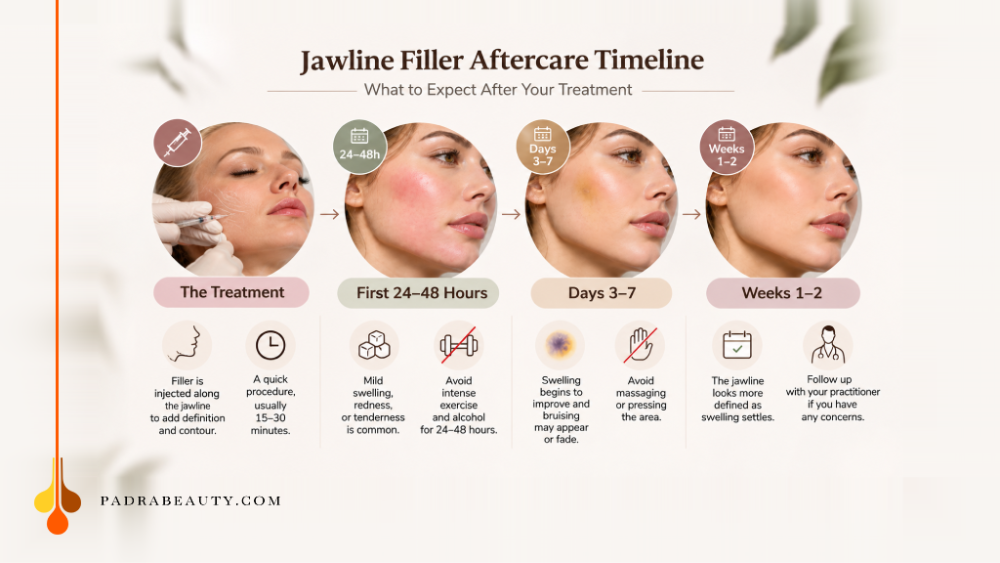
The First 24 Hours After Treatment
You may notice a more defined jawline immediately after treatment, but early swelling can make the area appear fuller than expected.
Common reactions during the first day include:
- Swelling and redness: Mild puffiness or small red marks around injection sites.
- Tenderness: Sensitivity or tightness when touching or moving your jaw.
- Firmness: A slightly harder feeling beneath the skin.
- Bruising: Small bruises that may appear immediately or develop later.
You can usually talk, smile, walk, and eat normally. If chewing feels uncomfortable, softer foods may help temporarily. Keep the injection sites clean, avoid rubbing your jawline, and follow your practitioner’s instructions. It’s too early to evaluate the final shape or symmetry.
Days 2-3: Swelling and Early Recovery
Swelling may become more noticeable on the second or third day, sometimes making the lower face look wider around the jaw angles.
One side may appear slightly fuller than the other because swelling does not always develop evenly. Bruising may also become darker before it begins to fade.
A mild feeling of tightness when smiling or moving your jaw can occur, but it should gradually improve.
The important sign is progress. Swelling that begins to settle is generally expected; rapidly worsening pain, increasing redness, or unusual skin discoloration needs medical attention.
Days 4-7: Healing and Returning to Normal
By the end of the first week, many people notice less swelling and tenderness. The jawline often looks more defined as bruises fade and the tissues recover.
You may experience:
- Improved comfort during everyday facial movements.
- Reduced swelling and a clearer jawline contour.
- Bruises fading or changing to yellow or green.
- Small areas of firmness that gradually feel softer.
Most usual activities can be resumed as comfort allows, unless your practitioner advises otherwise.
Some firmness or swelling may remain beyond the first week. If the jawline still looks uneven, allow the early healing period to pass before considering additional filler.
What to Avoid After Jaw Filler
Most aftercare restrictions are temporary. Their purpose is to minimize irritation, pressure, and activities that may make swelling or bruising worse.
Exercise, Alcohol, and Heat
During early recovery:
- Intense exercise: Avoid strenuous workouts, running, and heavy lifting for approximately 24-48 hours. Light walking is generally fine.
- Alcohol: Avoid drinking for at least the first 24 hours, or longer if advised, as it may contribute to bruising.
- Excessive heat: Avoid saunas, steam rooms, hot yoga, and very hot baths for the first day or two.
- Strong sunlight: Protect your skin and avoid activities that cause significant facial overheating.
These precautions support comfort during recovery. Ordinary movement or brief sun exposure does not automatically damage the filler.
Pressure, Massage, and Skincare
Avoid massaging, pressing, or trying to reshape your jawline yourself. If a lump develops, let your practitioner assess it rather than attempting to flatten it.
Be gentle when washing your face and temporarily avoid aggressive exfoliation, facial massage, and irritating products near the injection sites.
Tight chin straps or anything that places prolonged pressure on the jaw may be uncomfortable during the first few days.
If you’re planning dental work, laser treatment, or another facial procedure, discuss the timing with your practitioner. Recommendations vary depending on the treatment and recovery.
How to Reduce Swelling, Bruising, and Discomfort
Mild swelling and bruising usually improve without treatment. A few practical steps can make the jawline filler recovery period more comfortable.
- Apply a cool compress if recommended. Wrap it in a clean cloth and use it gently for short periods. Avoid direct ice contact and firm pressure.
- Keep your head slightly elevated. An extra pillow may help with overnight puffiness.
- Stay hydrated and eat comfortably. Choose softer foods if chewing feels tender. There’s no special diet proven to speed up filler healing.
- Take a break from intense activity. Give early swelling time to settle before returning to demanding workouts.
- Ask about suitable pain relief. Some medicines can increase bruising. Never stop prescribed medication, including blood thinners, without medical advice.
Supplements such as arnica or bromelain are not essential for recovery, and their benefits remain uncertain.

Avoid repeatedly touching your jaw to check the result. If swelling or discomfort is increasing rather than improving, contact your practitioner.
How to Sleep After Jaw Filler
For the first night or two, sleeping on your back with your head slightly elevated may be more comfortable. This helps avoid direct pressure on the treated jawline and may reduce morning swelling.
If you normally sleep on your side, use pillows for support and try not to press your jaw firmly against the bedding while it feels tender.
What If You Accidentally Sleep on Your Side?
Don’t assume your filler has moved because you woke up on your side. Ordinary side sleeping does not automatically affect the result, and there’s limited evidence that sleeping position alone changes filler placement.
The main goal is to avoid unnecessary pressure during early recovery.
You can usually return to your preferred sleeping position as tenderness improves, unless your injector recommends otherwise.
When Does Jawline Filler Settle?
Jawline filler often produces visible changes immediately, but the final contour becomes clearer once swelling and bruising improve.
With hyaluronic acid fillers, many people notice a more settled appearance after one to two weeks. A review around two to four weeks can help assess symmetry, definition, and any remaining firmness. The timing varies by product. Collagen-stimulating fillers may have a different results timeline.
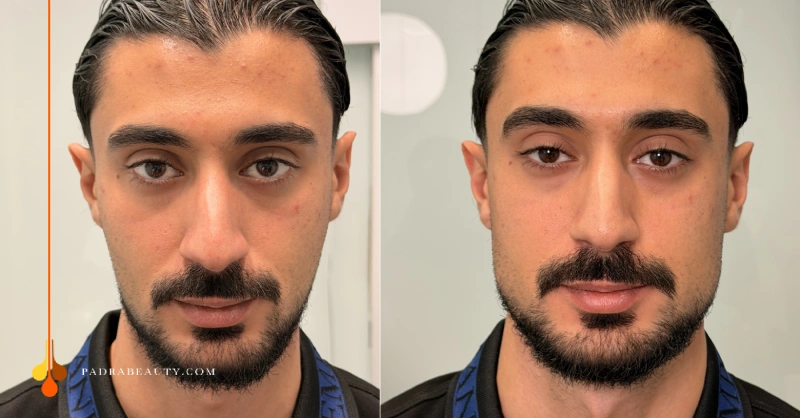
Why Can the Jawline Look Different During Recovery?
Several temporary changes can affect your appearance:
- Extra fullness: Swelling may make the jawline look wider than the intended result.
- Firmness: Structural fillers can feel firm, while surrounding tissue swelling adds to the sensation.
- Asymmetry: Uneven swelling can make one side look different during the first days.
These changes often improve, but persistent visible lumps or significant asymmetry should be examined.
When Should You Arrange a Follow-Up?
A follow-up is useful if swelling or firmness persists, the contour looks uneven after early recovery, or you’re considering adjustments.
If you take recovery photos, use consistent lighting and camera angles. Photos taken immediately after treatment may not represent the final result.
Remember that not all fillers are reversible. Some hyaluronic acid fillers can be dissolved when clinically appropriate, while other materials require different management.
When to Seek Medical Attention After Jawline Filler
Mild tenderness, bruising, and swelling can be expected. Severe, unusual, or worsening symptoms should not be dismissed as normal healing.
Symptoms That Need Emergency Care
Seek emergency medical attention immediately if you notice:
- Severe or rapidly increasing pain, particularly with skin changes.
- Skin turning white, grey, blue, or developing a spreading mottled pattern.
- Sudden blurred vision, double vision, or vision loss.
- Stroke-like symptoms, including weakness, facial drooping, or difficulty speaking.
- Difficulty breathing or rapidly developing swelling of the tongue or throat.
These symptoms can indicate rare but serious complications, including blocked blood flow. Do not wait for a routine appointment or attempt to massage the filler.
When to Contact Your Practitioner
Arrange prompt medical assessment for increasing redness or warmth, fever, discharge, painful lumps, or swelling that worsens instead of improving.
Persistent numbness, visible asymmetry, or a lump that remains after the initial healing period also deserves professional review.
Considering Jawline Filler?
Explore your treatment options at Padra Beauty and learn what to expect from your results and recovery.
Conclusion
Jawline filler aftercare is generally simple: keep the area clean, avoid unnecessary pressure, pause intense exercise briefly, and follow your practitioner’s instructions.
Swelling and tenderness usually improve over the following days, while the final jawline shape may take a few weeks to assess.
Give your jawline time to settle, and seek medical advice if symptoms are unusual, persistent, or getting worse.
