







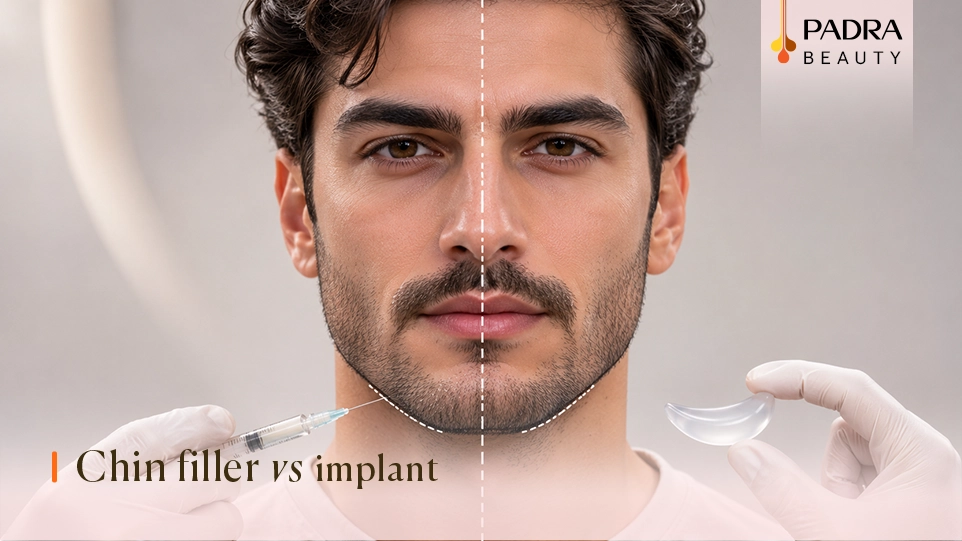
Chin implant vs chin filler comes down to the type of change you want. Chin filler adds volume and improves contours without surgery, while a chin implant provides stronger, long-term projection through a surgical procedure.
Both can improve a weak chin and create a more balanced facial profile. However, they differ in results, recovery, cost, and commitment. Understanding these differences can help you decide which approach may suit your goals.
Chin Filler vs Implant: What’s the Difference?
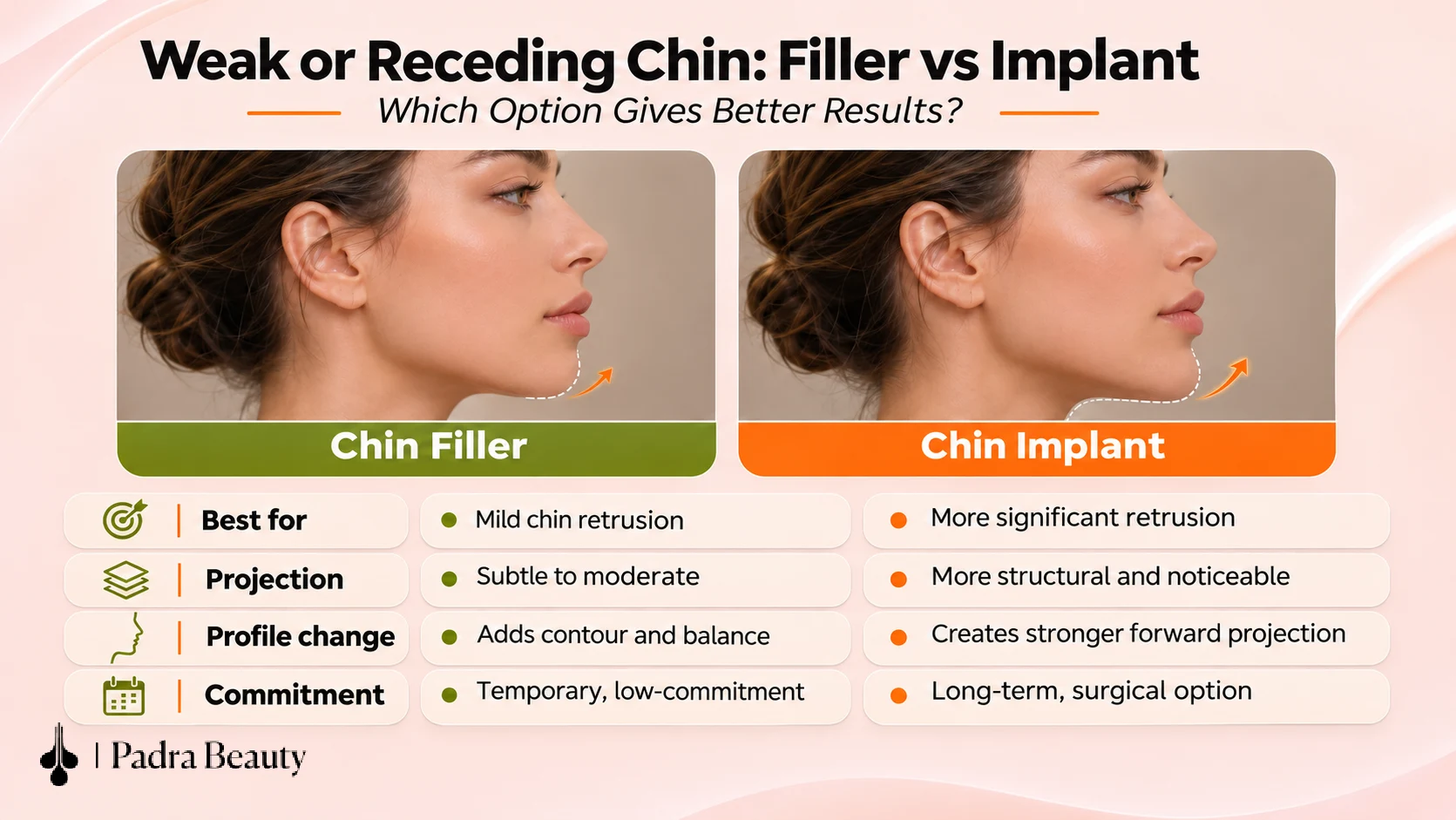
The main difference between chin filler and a chin implant is how they enhance the chin. Chin filler uses an injectable gel, usually hyaluronic acid (HA), to add volume and refine the chin’s shape. A chin implant is a solid, biocompatible device placed over the chin bone to increase projection.
Filler generally suits smaller adjustments and people who prefer a temporary result. An implant may be more appropriate for a noticeably recessed chin when a stronger, longer-lasting change is desired.
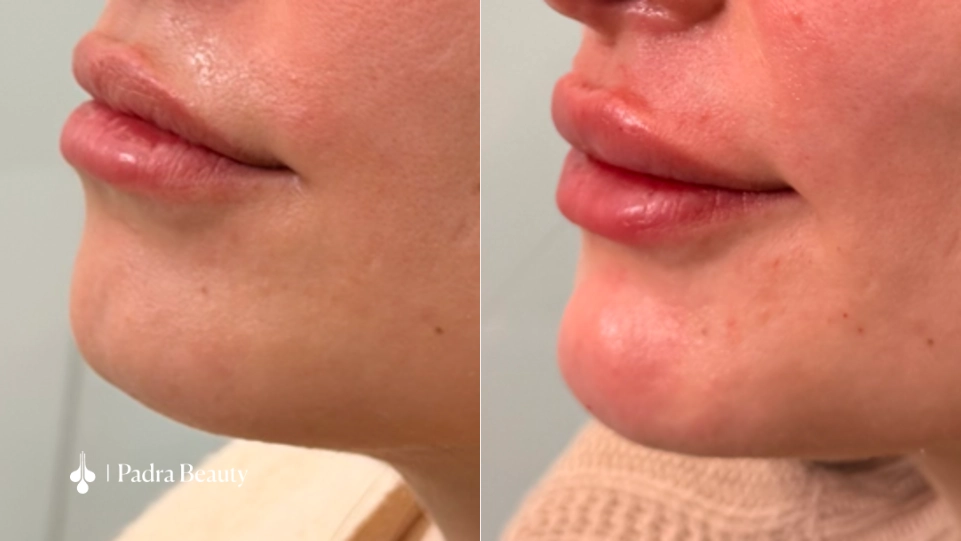
Chin Filler vs Chin Implant Comparison
| Feature | Chin Filler | Chin Implant |
|---|---|---|
| Procedure Type | Non-surgical injections | Surgical procedure |
| Type of Change | Added volume and contour | Structural projection over the chin bone |
| Degree of Change | Subtle to moderate enhancement | Greater, more defined projection |
| Longevity | Often around 12–18 months | Long-term; designed to be permanent |
| Recovery / Downtime | Minimal; possible swelling or bruising | Around 1–2 weeks of initial recovery |
| Reversibility | HA filler can often be dissolved | Removal or adjustment requires surgery |
| Maintenance | Periodic touch-ups | Usually no routine touch-ups; revision may be needed |
| Customization | Precise adjustments to volume and shape | Implant size and shape selected for facial anatomy |
| Best Suited For | Mild chin recession or contour refinement | More significant chin deficiency |
| Initial Commitment | Lower; no surgery required | Higher; involves surgery and longer recovery |
These are general comparisons. Results, recovery, and suitability depend on individual anatomy, the product or implant used, and the treating specialist.
Which Gives Better Results for a Weak or Receding Chin?
A chin implant generally provides stronger projection for a significantly recessed chin, while filler can work well for mild recession. The better result depends on how much forward definition your chin needs.
Filler can improve a slightly weak profile, refine asymmetry, or create a smoother transition into the jawline. However, adding too much filler may make the chin appear wider or heavier instead of more projected.
An implant can provide greater forward definition without relying on repeated injections. Still, neither treatment is automatically better for everyone.
A recessed chin can sometimes reflect an underlying jaw-position or bite problem. In these cases, a surgeon may recommend an assessment for procedures such as genioplasty or jaw surgery rather than filler or an implant alone.
How Long Do Chin Filler and Chin Implant Results Last?
Chin filler provides temporary results, while chin implants are designed to last long term. Their different lifespans come from the way each treatment works.
Hyaluronic acid filler is gradually broken down by the body. Results often remain noticeable for around 12–18 months, although the actual duration depends on the product, placement, and individual response.
A chin implant does not dissolve like filler. It can remain in place for many years without routine replacement, but complications or changes in appearance may sometimes require revision or removal.
If you prefer a temporary change, filler offers more flexibility. If you want lasting projection without regular injections, an implant may be worth considering.
Considering Chin Enhancement? Find Your Best Option
Explore suitable options for your chin and facial profile with Padra Beauty.
Chin Implant vs Filler: Recovery and Downtime
Chin filler usually involves less downtime than chin implant surgery. Most people can return to everyday activities soon after injections, although mild swelling, tenderness, or bruising may last several days.
A chin implant requires more recovery because it involves an incision and surgical placement. Swelling, tightness, and discomfort are common during the early healing period.
Many patients need around one to two weeks before returning to their usual routines. Strenuous activities may need to be avoided for longer, and the final contour can take several weeks or months to settle.
Recovery instructions depend on the procedure. Follow your practitioner’s guidance on exercise, pressure on the chin, sleeping position, and wound care.
What Are the Risks and Side Effects of Each?
Both chin fillers and implants carry potential risks, but the complications differ because one involves injections and the other requires surgery.
Chin filler side effects may include:
- Temporary swelling, bruising, or tenderness.
- Lumps, asymmetry, or unwanted changes in shape.
- Infection or filler migration.
- Rare vascular occlusion, which can damage tissue if blood flow is blocked.
Chin implant risks may include:
- Swelling, bleeding, infection, or scarring.
- Temporary or persistent numbness from nerve irritation or injury.
- Implant shifting, asymmetry, or discomfort.
- Bone changes beneath the implant or the need for revision surgery.
- Risks associated with anesthesia.
Most mild post-treatment symptoms improve during healing. However, severe or worsening pain, pale or unusual skin discoloration after filler, or signs of infection require urgent medical assessment. Sudden vision changes or other serious neurological symptoms require emergency care.
Choosing a qualified medical professional and discussing your medical history before treatment are essential for both procedures.
Chin Implant vs Chin Filler Cost: Which Is More Cost-Effective?
Chin filler is generally less expensive initially, while a chin implant has a higher upfront cost. However, the more cost-effective option depends on how long you want to maintain the result.
Filler costs reflect the product used, injection technique, and amount needed. Because the body gradually absorbs it, maintaining the same appearance usually requires additional appointments.
An implant costs more upfront because it involves surgery, anesthesia, and postoperative care. It usually does not require routine replacement, although revision surgery can create additional expenses.
For a subtle or temporary change, filler may offer better value. An implant may be more cost-effective over time for someone seeking a lasting result, but that depends on individual circumstances.
Chin Implant or Chin Filler: Which One Is Right for You?
Chin filler may be better if you want a subtle, adjustable change without surgery. A chin implant may suit you if you need stronger projection and prefer a long-term result.
Consider these factors before deciding:
- Your chin shape: Mild recession may respond well to filler; greater deficiency may need surgical assessment.
- Your desired result: Small contour adjustments differ from a noticeable increase in projection.
- Your lifestyle: Filler generally allows a quicker return to normal activities.
- Your long-term plans: Decide whether you prefer occasional maintenance or a surgical commitment.
If you’re comparing side-profile photos or online facial-enhancement trends, remember that appearance alone cannot reveal the cause of a recessed chin. A proper assessment should consider your jaw position, bite, and overall facial proportions.
