






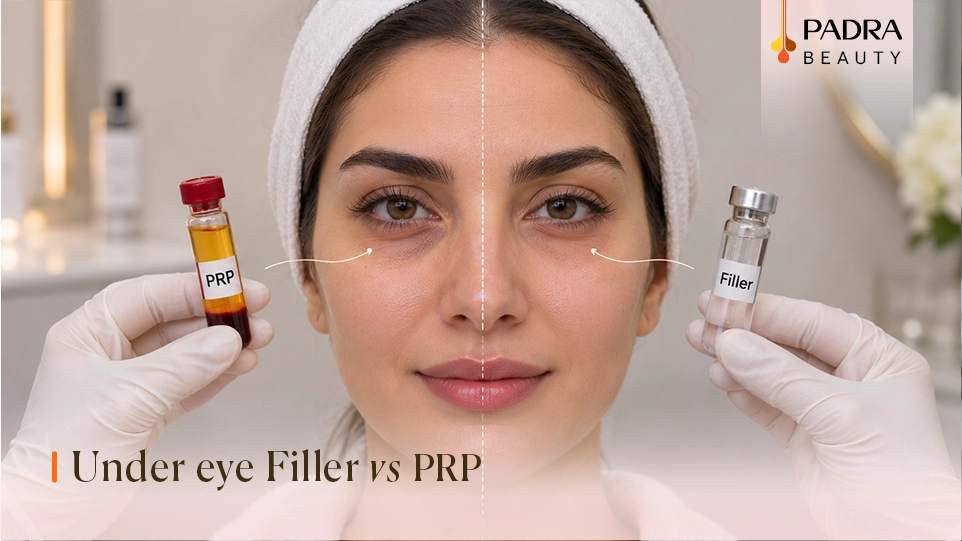
Under eye filler vs PRP is a comparison between two treatments that address different causes of a tired-looking eye area. Under-eye filler restores lost volume and reduces shadows caused by hollows, while platelet-rich plasma (PRP) aims to improve skin quality through the body’s natural repair processes.
Both treatments involve injections, but their results, recovery, and suitability differ. The better option depends on whether your main concern is dark circles, hollow under-eyes, or fine lines.
Under Eye Filler vs PRP: Key Differences
The main difference between under-eye filler and PRP is how they work. Under-eye filler uses a hyaluronic acid (HA) gel to restore volume in selected areas beneath the eyes. PRP uses concentrated platelets prepared from your own blood to support skin repair and potentially improve texture and discoloration over time.
| Feature | Under-Eye Filler | PRP |
| How It Works | HA gel restores lost volume | Platelets and growth factors support skin repair |
| Best For | Tear trough hollows and volume-related shadows | Skin texture, some dark circles, and fine lines |
| Results Timeline | Immediate improvement; settles over 1–2 weeks | Gradual changes over several weeks |
| Longevity | Often 6–18 months | Variable; long-term durability is uncertain |
| Sessions Needed | Usually one, with review if needed | Often 2–4 sessions, several weeks apart |
| Cost | Generally higher per session | Often lower per session; multiple sessions increase total cost |
| Downtime | Swelling or bruising may last several days | Temporary redness, swelling, or bruising |
These are typical treatment patterns, not guaranteed outcomes. PRP protocols and results vary considerably, while filler longevity depends on the product, placement, and individual response.
Under-Eye Filler or PRP? Find Your Best Option
Explore suitable treatments for your under-eye concerns with Padra Beauty.
Which Is Better for Dark Circles, Hollows, and Fine Lines?
Under-eye filler is generally more effective for hollows caused by volume loss, while PRP may be more suitable for certain skin-quality concerns. Neither treatment addresses every type of dark circle or under-eye wrinkle.
The cause of the problem matters more than the name of the treatment.
Dark Circles
The better treatment for dark circles depends on why the area looks dark. Shadows caused by hollowing are different from brown pigmentation or a bluish appearance through thin skin.
Under-eye filler may reduce dark shadows by smoothing the transition between the lower eyelid and cheek. However, it does not directly remove pigmentation.
PRP may improve some cases of discoloration by supporting changes in skin quality. Research suggests possible benefits for periorbital pigmentation, but results are variable and not consistently supported by large clinical trials.
Dark circles related to genetics, allergies, visible blood vessels, or pigmentation may need a different treatment approach.
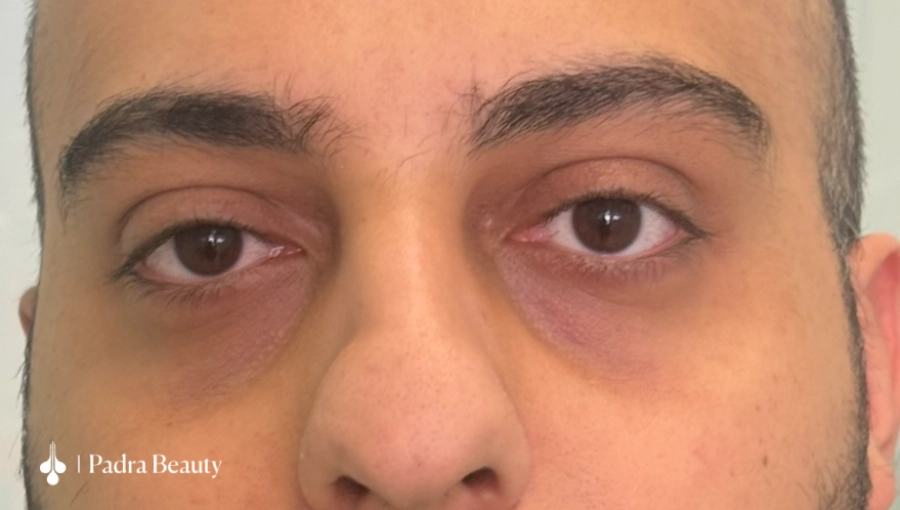
Under-Eye Hollows
Filler is usually the more direct option for under-eye hollows because it replaces volume in the tear trough area.
By filling an appropriate depression, it can soften the shadow that makes the eyes appear sunken or tired. However, not everyone with hollow under-eyes is a suitable candidate for filler.
PRP does not provide the same predictable volume replacement. Although some studies report improvements in mild hollowing, it should not be considered an alternative to filler for significant volume loss.
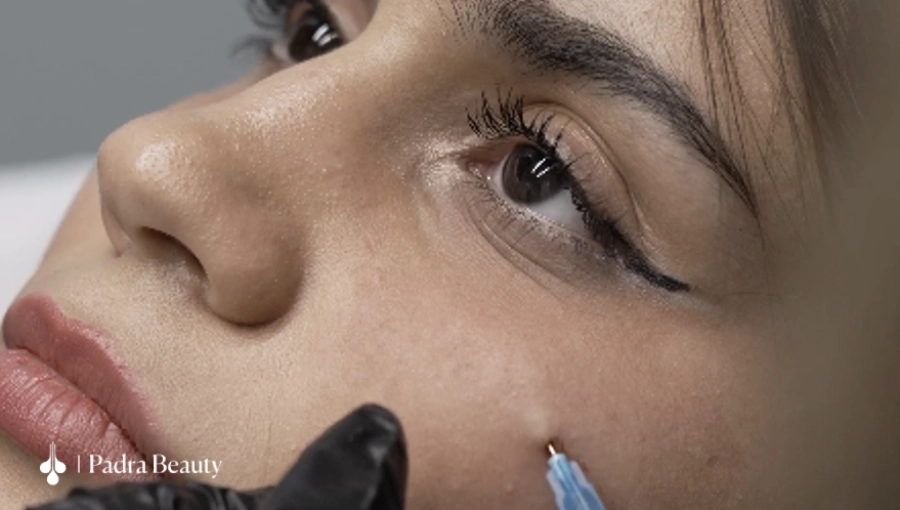
Fine Lines and Crepey Skin
PRP may be considered for fine lines associated with thin, crepey, or aging skin. Its growth factors are used to encourage tissue repair, with possible gradual improvements in skin texture.
However, the evidence remains mixed, and noticeable wrinkle reduction is not guaranteed.
Under-eye filler may soften certain lines related to volume loss, but it is not usually the first choice for fine surface wrinkles. Poorly placed filler can also make texture irregularities or puffiness more noticeable.
Which Is Safer: PRP or Under Eye Filler?
PRP avoids some filler-related risks, but neither treatment is completely risk-free. Safety depends on your medical history, under-eye anatomy, and the practitioner’s experience.
PRP uses your own blood, making allergic reactions to the plasma uncommon. Under-eye filler requires extra caution, as improper placement can worsen puffiness or cause serious complications.
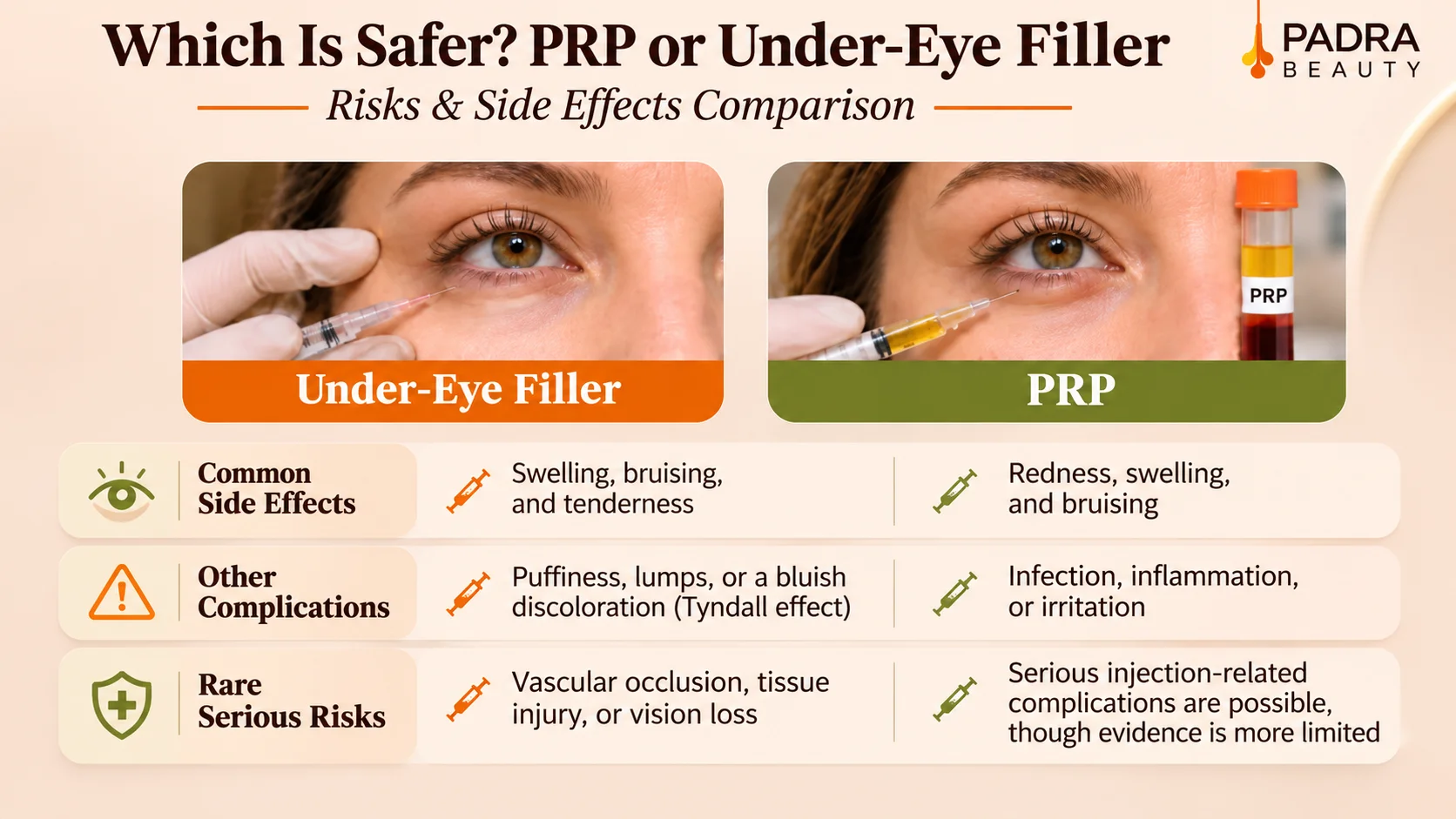
Seek emergency care for sudden vision changes, severe pain, or unusual skin discoloration after filler. Signs of infection after either treatment also require prompt medical attention
Which Under Eye Treatment Is Right for You?
The right treatment depends on the cause of your under-eye concerns, your expectations, and whether the area is suitable for injections.
Under-eye filler may be worth considering when the main issue is a clearly defined hollow caused by volume loss. It can provide a more immediate structural change, although some patients are not good candidates because of existing puffiness or other anatomical factors.
PRP may be more appropriate when skin texture, mild discoloration, or early signs of skin aging are the main concerns. It also requires patience, as improvements may be subtle and multiple sessions are often recommended.
Before deciding, consider:
- Your main concern: Hollowing, pigmentation, skin texture, or a combination.
- Your expectations: Immediate volume correction or gradual skin improvement.
- Your treatment plan: One filler appointment or a possible series of PRP sessions.
- Your medical suitability: Existing puffiness, previous treatments, medications, and overall health.
Can Under-Eye Filler and PRP Be Combined?
Under-eye filler and PRP may be used in the same overall treatment plan when a person has both volume loss and skin-quality concerns.
However, combining them is not necessary for everyone, and evidence for added benefits from using both together remains limited. A qualified practitioner should decide whether either treatment, both treatments, or a different approach is appropriate.
