





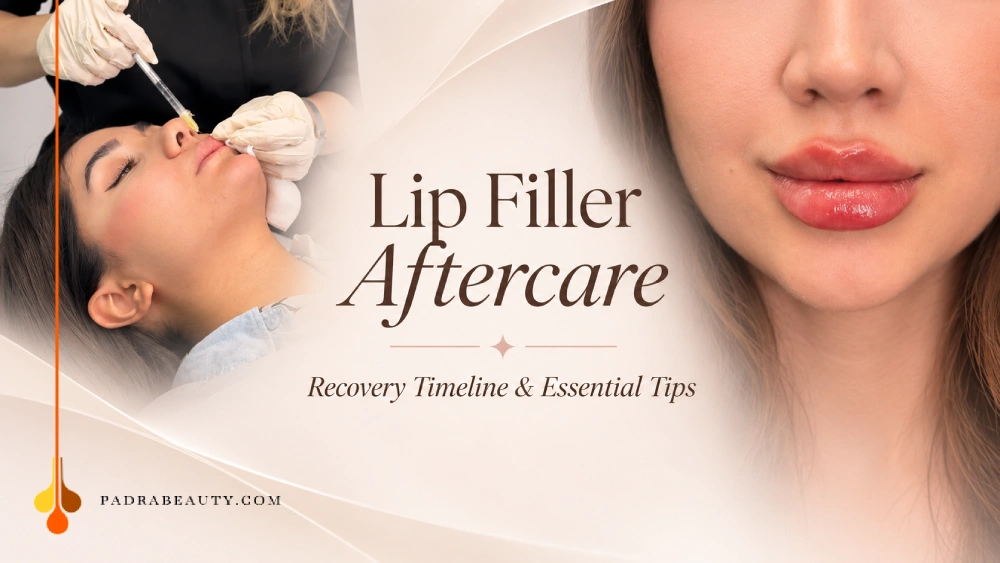
Swollen, tender, or slightly uneven lips after filler? These changes are common, especially during the first 24–48 hours. Swelling usually improves over the following days, while the final appearance may take two to four weeks to become clear.
Good lip filler aftercare is mostly about keeping your lips comfortable, being gentle with the injection sites, and knowing when to seek medical advice.
This guide covers the lip filler recovery timeline, what to do and avoid, useful aftercare products, and the symptoms you shouldn’t ignore.
Why Is Lip Filler Aftercare Important?
Lip fillers add volume and shape to the lips, usually using hyaluronic acid. Although the injections are minimally invasive, they can temporarily irritate the surrounding tissue.
Proper aftercare helps you manage swelling, tenderness, and bruising while the area heals. It also reduces unnecessary irritation around the injection sites.
Most people can return to their usual routines quickly. However, lip filler recovery time varies with the product used, the amount injected, your skin’s response, and the treatment technique.
Aftercare cannot guarantee perfect results or prevent every complication. Your practitioner’s instructions should always take priority.
What to Do in the First 24-48 Hours After Lip Fillers
The first two days are usually when your lips need the most attention. You don’t need a complicated routine, just a few sensible precautions.
Your essential lip filler aftercare dos and don’ts:
- Keep the area clean: Avoid touching injection points with unwashed hands.
- Use a cool compress if recommended: Wrap it in a clean cloth and apply gently for a few minutes at a time.
- Stay hydrated: Drink water as usual and choose comfortable foods if your lips feel tender.
- Avoid unnecessary pressure: Don’t squeeze your lips or repeatedly check for lumps.
- Pause strenuous exercise: Give swelling and bruising time to settle.
- Follow your practitioner’s instructions: Ask before using medication, skincare products, or massage techniques.
If your lips are still numb from the anesthetic, wait until normal sensation returns before eating or drinking anything very hot. This helps prevent accidental biting or burns.
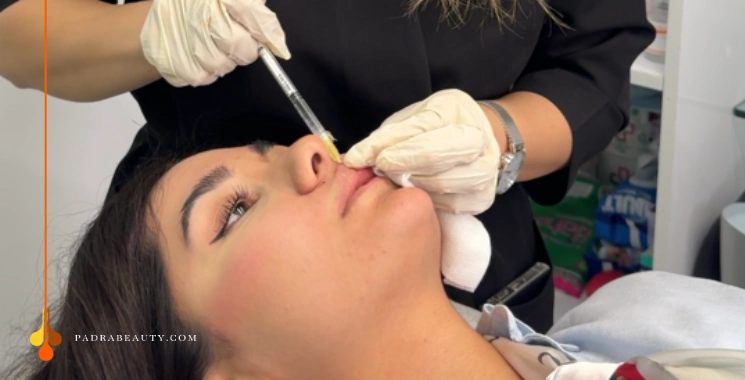
Lip Filler Healing Process Day by Day
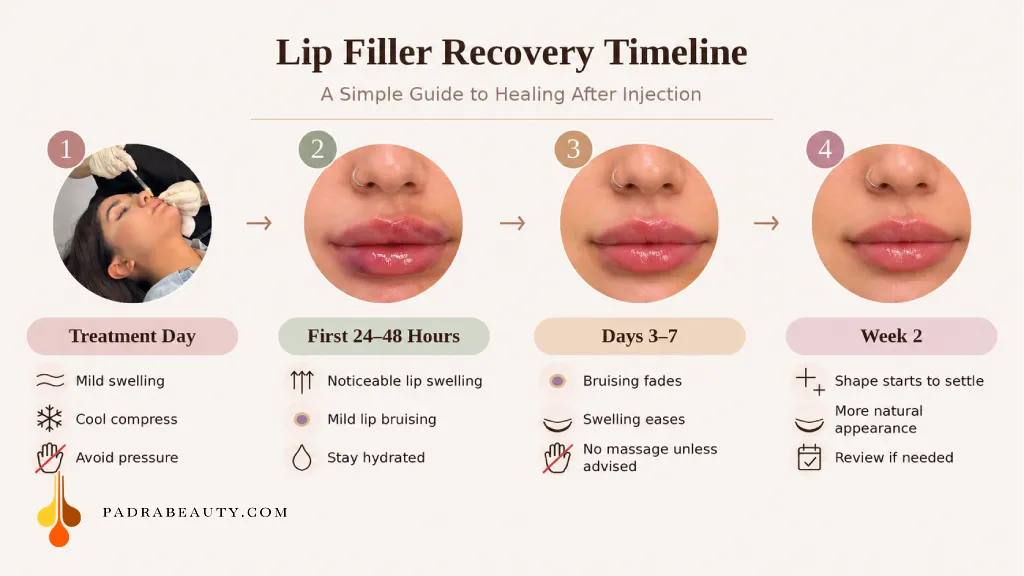
The lip filler recovery process is gradual. The stages below describe a typical healing pattern, not a fixed schedule for everyone.
Day 1-2: Initial Swelling and Tenderness
Immediately after treatment, your lips may look fuller than expected. Swelling can increase during the first 24–48 hours, and small injection marks may remain visible.
Common early changes include:
- Puffy or slightly uneven lips.
- Mild redness, tightness, or tenderness.
- Small bruises around injection sites.
- Temporary firmness when the lips touch.
Your lips may feel uncomfortable when smiling, talking, or eating. These sensations should generally begin to improve rather than become progressively worse.
Don’t judge your final lip shape during these first two days. Swelling can temporarily affect both volume and symmetry.
Days 3-4: Swelling and Bruising Begin to Improve
By days three and four, many people notice less swelling and greater comfort. Bruising may become more noticeable or change color before fading.
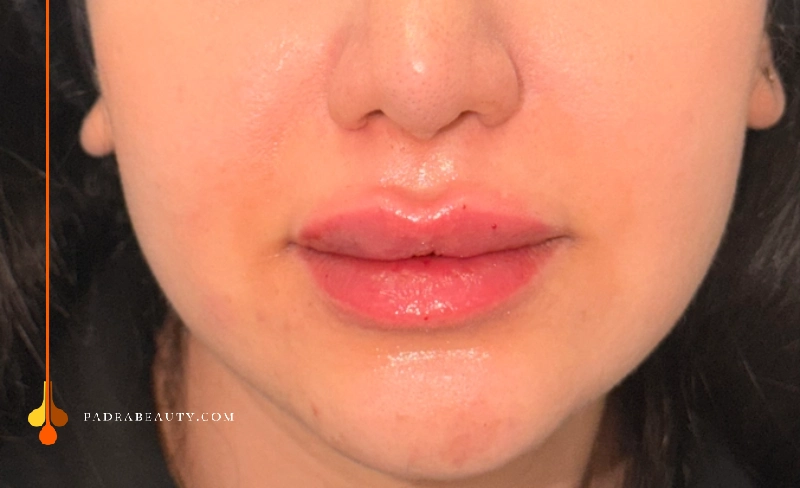
One side of the lips may still appear slightly larger than the other. This can happen because swelling doesn’t always resolve evenly.
Continue treating the area gently and avoid trying to reshape any firm spots yourself.
If swelling or pain is increasing significantly instead of improving, contact your practitioner.
Days 5-7: Early Recovery
During the first week, the lips often begin to feel softer and look more natural. Most everyday activities should be comfortable again.
You may notice:
- Less puffiness and tenderness.
- Bruises fading.
- Improved lip symmetry as swelling decreases.
- Small areas of firmness becoming less noticeable.
Some residual swelling is still possible. If you’re concerned about the shape, wait until the early healing period is over before considering a touch-up.
Second Week: When Lip Fillers Start to Settle
By the second week, much of the initial swelling has usually improved. The lip border and added volume become easier to assess.
However, lip filler recovery stages differ between individuals. Some people may need two to four weeks before the lips feel and look fully settled.
A follow-up appointment can help your practitioner assess the result and any lingering concerns.
How to Reduce Swelling and Bruising After Lip Fillers
Mild swelling and bruising generally improve on their own. These lip filler recovery tips can help you stay comfortable:
- Cool the area gently: Use a clean, cloth-wrapped cold pack for about 5–10 minutes at a time if recommended. Never apply ice directly or press firmly.
- Elevate your head: An extra pillow may help reduce overnight puffiness.
- Take a break from intense workouts: Increased circulation and heat can make early swelling more noticeable.
- Avoid repeatedly touching your lips: Frequent checking can irritate tender tissue.
- Ask about pain relief: Acetaminophen (paracetamol) may be suitable for some people. Check with your clinician, especially if you take other medication.
Aspirin and certain anti-inflammatory medicines can increase bruising, but never stop prescribed medication, including blood thinners, without medical advice.
You don’t need special supplements to heal. Products such as arnica or bromelain have uncertain benefits and may not be suitable for everyone.
What to Avoid After Lip Fillers
Most restrictions are temporary and intended to limit discomfort or irritation. Normal lip movements do not automatically cause filler to move.
Exercise, Alcohol, and Heat Exposure
For the first 24–48 hours:
- Avoid strenuous exercise: such as running, heavy lifting, and intense gym sessions. Light walking is generally fine.
- Limit alcohol: particularly during the first 24 hours, as it may make bruising more noticeable.
- Avoid excessive heat: including saunas, steam rooms, hot yoga, and very hot baths.
- Avoid smoking or vaping when possible: especially while the injection sites are healing, to reduce irritation and unnecessary lip pressure.
Resume normal activities as tenderness improves and according to your practitioner’s advice.
Lipstick, Makeup, and Lip Products
You may be wondering whether you need a lip filler aftercare cream, balm, or special products.
There is no single product required for recovery. Some practitioners allow a clean, plain lip balm shortly after treatment, while others recommend waiting until the injection points have closed, often until the following day.
Choose a simple, fragrance-free balm if your practitioner approves. Avoid irritating products, lip plumpers, exfoliating acids, and vigorous application while your lips are sensitive.
Lipstick and lip gloss can usually be resumed once the puncture sites have healed sufficiently. Use clean products and applicators.
A lip filler aftercare kit is optional, not essential. A clean cold compress and an approved gentle balm are often enough for basic comfort. There’s no need to buy expensive creams promising faster healing.
Touching, Massaging, and Putting Pressure on Your Lips
Avoid squeezing, rubbing, or attempting to massage filler lumps yourself unless your practitioner specifically instructs you to do so.
Gentle everyday movements are generally safe. However, vigorous kissing or prolonged pressure may feel uncomfortable while the lips are swollen.
If you’re wondering about lip filler aftercare and kissing, the practical advice is to avoid forceful pressure until tenderness improves, rather than assuming that any gentle kiss will displace the filler.
Eating, Drinking, and Using Straws
You can usually eat and drink normally once the anesthetic wears off.
During the first day:
- Choose softer foods if chewing feels uncomfortable.
- Avoid very hot drinks until sensation has returned.
- Be gentle when wiping your mouth.
- Use a straw only if it feels comfortable.
Using a straw or making normal lip movements does not automatically move filler. The main concern is discomfort or excessive pressure during early recovery.
How to Sleep After Lip Fillers
For lip filler aftercare sleeping, comfort matters more than following a rigid sleeping rule.
Sleeping on your back with your head slightly elevated during the first night or two may help reduce morning swelling and avoid pressure on tender lips.
If you prefer sleeping on your side, try to keep your mouth from pressing firmly into the pillow.
Accidentally rolling onto your side doesn’t mean your filler has moved. You can generally return to your usual sleeping position as discomfort improves.
What Is Normal During Lip Filler Recovery?
It’s common for your lips to look and feel different during the first week. The important question is whether symptoms are gradually improving.
Swelling, Tenderness, and Bruising
Mild swelling, redness, sensitivity, and bruising are typical after injectable fillers.
Swelling is often most noticeable within the first 24–48 hours, then gradually decreases. Bruising may take several days or around one to two weeks to disappear.
Your lips may also feel temporarily tight or slightly numb.
These symptoms should generally become less noticeable, not more severe.
Lumps, Firmness, and Temporary Unevenness
Small areas of firmness or palpable bumps can occur while swelling settles and the tissues recover.
Temporary asymmetry is also possible because one side may swell more than the other.
Don’t attempt to flatten lumps by pressing or massaging your lips. Your practitioner should assess any lump that is painful, growing, clearly visible, or persistent.
Firmness alone doesn’t always indicate a problem, but its appearance, location, and progression matter.
When Should You Seek Medical Attention After Lip Fillers?
Most reactions are mild, but serious filler complications can occur.
Symptoms That Need Emergency Care
Seek emergency medical attention immediately if you experience:
- Severe or rapidly increasing pain, especially with skin color changes.
- White, grey, blue, or unusually mottled skin around the lips.
- Sudden blurred vision, vision loss, or double vision.
- Stroke-like symptoms, such as facial drooping, weakness, or difficulty speaking.
- Difficulty breathing or rapidly developing swelling of the tongue or throat.
These symptoms may indicate rare but serious problems, including blocked blood flow or a severe allergic reaction. Do not wait for a routine follow-up appointment.
When to Contact Your Practitioner
Arrange prompt medical assessment for increasing redness or warmth, fever, discharge, worsening swelling, or a painful lump.
Lip filler injections may also trigger cold sores in people with a history of oral herpes. If blisters or familiar tingling develop, contact your clinician promptly about appropriate treatment.
When Do Lip Fillers Settle and Show Final Results?
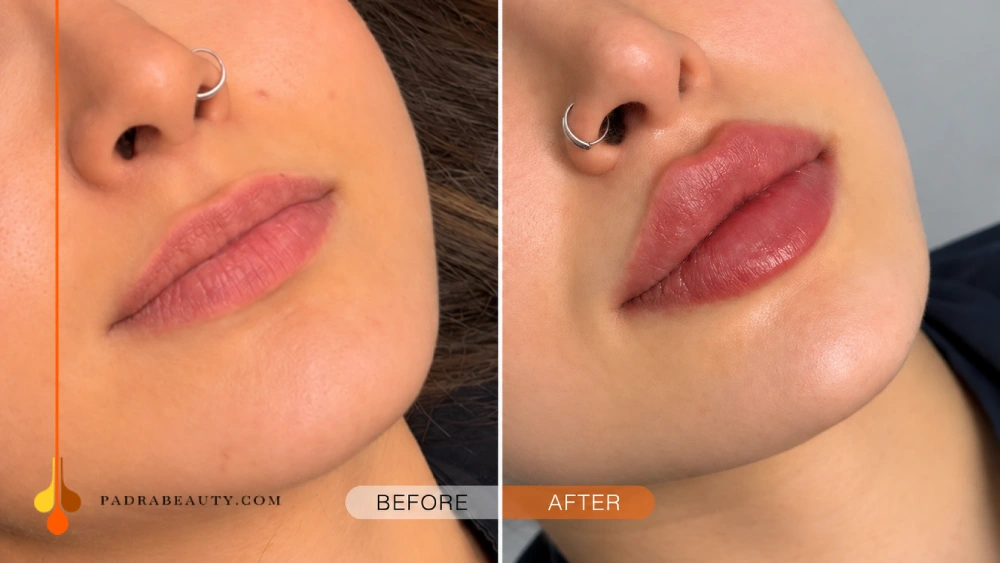
Lip filler results are visible immediately, but the initial swelling can make your lips appear larger or less even than they will eventually look.
Many people see substantial improvement within one to two weeks, although the final appearance may take two to four weeks to assess properly.
The exact lip filler recovery timeline depends on the product, injection technique, and individual response.
Understanding Lip Filler Recovery Photos
Taking lip filler recovery photos at similar angles and in consistent lighting can help you follow changes over time.
Photos taken immediately after the procedure may exaggerate swelling and aren’t a reliable indication of the final result.
You may also find day-by-day lip filler recovery experiences on Reddit or social media. These can show how much recovery varies, but personal posts cannot confirm what is medically normal for you.
A follow-up around two weeks, or whenever your practitioner recommends, is more useful than comparing your lips with someone else’s photos.
Considering Lip Fillers? Plan Your Treatment With Confidence
Explore lip filler options at Padra Beauty and discuss your desired results, expected recovery, and aftercare instructions during a personalized consultation.
Long-Term Lip Filler Aftercare and Maintenance
Once your lips have healed, you don’t need a complicated maintenance routine.
Focus on simple habits:
- Use a gentle lip balm if needed for dryness.
- Protect your lips from the sun with a suitable SPF lip product.
- Avoid unnecessary irritation from harsh exfoliating or plumping products.
- Attend follow-up appointments when recommended.
- Discuss any persistent lumps or changes rather than attempting self-treatment.
Lip fillers are temporary. How long they last depends on the filler used, the amount injected, and individual factors. Good skincare supports lip comfort but doesn’t guarantee that filler will last longer.
If you want to maintain the appearance, discuss the timing of any future treatment with your practitioner. Additional filler shouldn’t be based solely on how your lips look during early swelling.
Conclusion
Lip filler aftercare doesn’t have to be complicated. Gentle care, temporary adjustments to intense activity, and patience during the first two weeks are usually the main priorities.
Swelling and tenderness often improve within days, while the final shape may take a few weeks to become clear.
Follow your practitioner’s advice, avoid judging the result too early, and seek medical attention if symptoms are unusual or worsening.
