





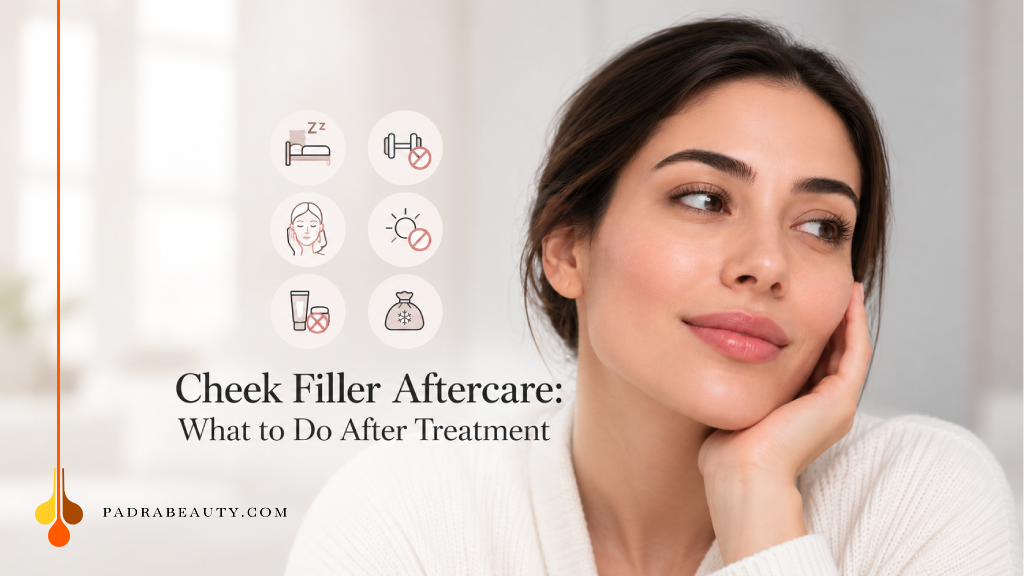
Just had cheek fillers and wondering what you should do next? Some swelling, tenderness, or bruising is common in the first few days. The good news is that most people can return to their normal routine soon after treatment, although their cheeks may need a little longer to settle.
The basics of cheek filler aftercare are simple: avoid unnecessary pressure, take a short break from intense exercise, and let early swelling improve before judging your results. This guide covers recovery day by day, sleeping positions, massage, skincare, and the signs that need medical attention.
Cheek Filler Aftercare Instructions
You don’t need an elaborate skincare routine after cheek filler. In fact, being gentle with your face is often the best place to start.
Here are the essential instructions to follow during early recovery:
- Leave your cheeks alone. Avoid rubbing, squeezing, or repeatedly touching the treated areas.
- Keep injection sites clean. Wash your face gently and avoid irritating products until the skin has recovered.
- Use a cool compress if advised. Wrap it in a clean cloth and apply gently without pressing on the filler.
- Limit strenuous activity. Give yourself at least 24 hours away from intense workouts, or longer if recommended.
- Avoid unnecessary facial pressure. Be mindful of sleeping positions, facial treatments, and anything pressing firmly against your cheeks.
- Follow your practitioner’s instructions. Different filler products may require different aftercare.
If you take prescribed medication, including blood thinners, do not stop or change it without guidance from the clinician responsible for your care.
These simple steps can make recovery more comfortable, but no aftercare routine can guarantee a particular cosmetic result or prevent every complication.
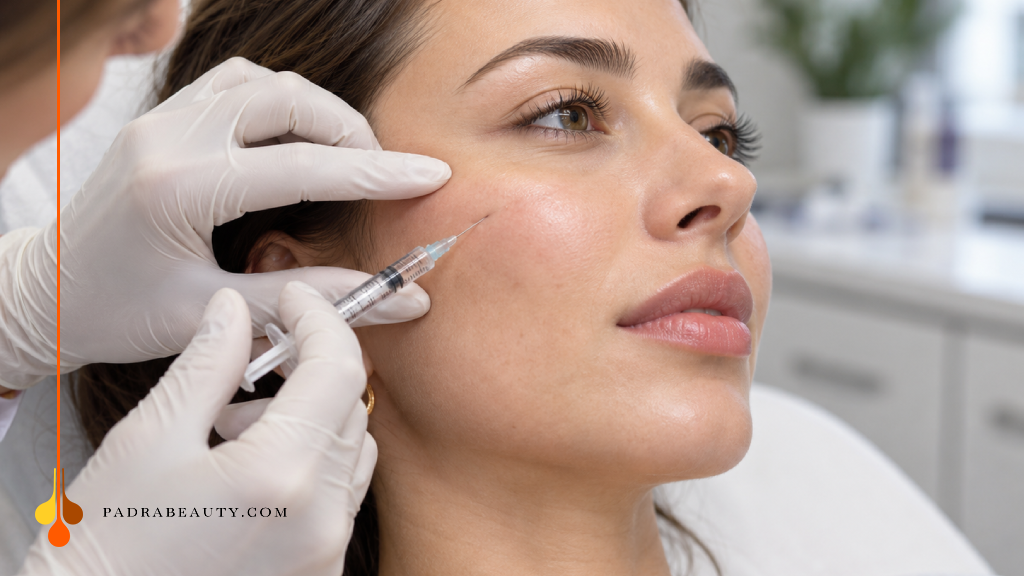
Cheek Filler Recovery Day by Day
One of the most common concerns after cheek fillers is whether the face looks the way it should.
Recovery isn’t identical for everyone. The type and amount of filler, injection technique, and individual response all affect how quickly swelling and tenderness improve. Here’s what a typical cheek filler recovery timeline may look like.
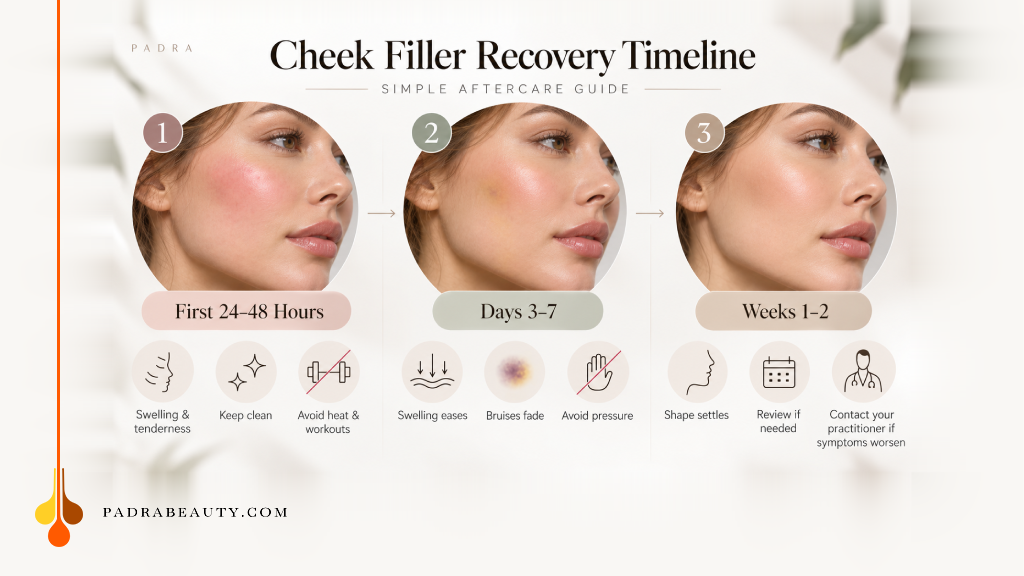
The First 24 Hours
Your cheeks may look fuller than expected immediately after treatment. This is partly the filler itself and partly the surrounding tissue responding to the injections.
You might notice mild swelling, redness, tenderness, or tiny marks where the needle or cannula entered the skin. Some people also feel tightness when smiling.
You can usually continue gentle daily activities, but this isn’t the best time to assess your new cheek contours. If your practitioner recommends a cold compress, use it carefully without putting pressure on the area.
Cheek filler day 2
Swelling may become more noticeable during the first 48 hours and can occasionally peak around the second or third day.
One cheek may look slightly fuller than the other, particularly in the morning. Bruises can also become more visible before they start fading. This doesn’t automatically mean that too much filler was used or that it has moved.
What matters is how your symptoms develop. Mild swelling and tenderness that begin to improve are generally reassuring. Increasing pain, significant discoloration, or rapidly worsening swelling need medical attention.
The First Week
Over the following days, many people notice less swelling and a more natural-looking cheek contour. Any bruising may change colour as it fades. The cheeks can still feel a little sensitive or firm, particularly when smiling or touching the area.
By the end of the first week, the treated area often looks closer to the expected result. However, some residual swelling and bruising can remain beyond this point.
If you have an important event coming up, allowing at least a couple of weeks between treatment and the event is generally more practical than relying on an exact recovery date.
When Cheek Filler Fully Settles
With hyaluronic acid (HA) cheek fillers, the initial improvement is often visible immediately, but the contour is easier to assess after the swelling has settled. For many people, this happens within approximately two to four weeks, although individual recovery varies.
Not all cheek fillers work in the same way. Collagen-stimulating treatments, such as poly-L-lactic acid fillers, can develop their effects gradually over a longer period.
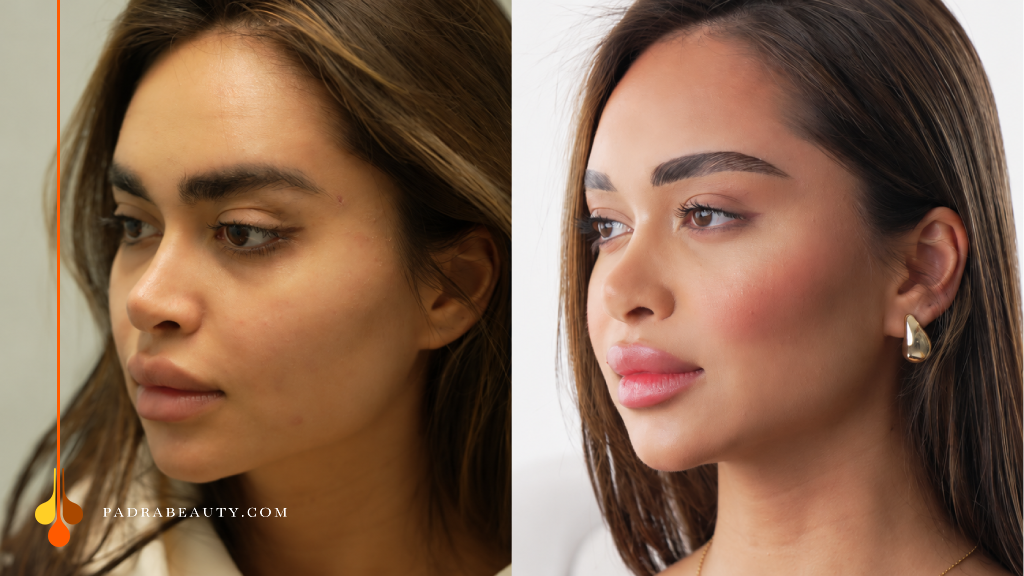
If you are comparing cheek filler before-and-after photos, wait until the initial swelling has improved. Use similar lighting, angles, and facial expressions for a more realistic comparison.
Your practitioner can recommend the appropriate time for a follow-up assessment.
How Should You Sleep After Cheek Filler?
cheek filler aftercare sleeping is usually straightforward, but the way your face rests against the pillow can affect comfort and temporary swelling.
Sleeping on your back is a sensible option for the first night or two, especially if your cheeks feel tender.
Try these practical tips:
- Use a comfortable pillow to keep your head slightly elevated.
- Avoid sleeping face-down with your cheeks pressed firmly into the mattress.
- If you tend to roll over, place pillows beside your body for extra support.
- Choose a sleeping position that allows you to rest without sustained pressure on the treated areas.
You do not need to remain sitting upright all night. The aim is to avoid prolonged pressure while your face is sensitive, not to follow an uncomfortable sleeping routine.
When Can You Sleep on Your Side After Cheek Filler?
There is no single medically established waiting period that applies to everyone.
Many practitioners suggest avoiding direct pressure on the cheeks for the first 24–48 hours. Once tenderness and swelling are improving, you may be able to return to side sleeping, provided your injector has not given you different instructions.
Accidentally sleeping on your side does not automatically mean your filler has migrated.
If you wake up with slightly more swelling on one side, give it time to settle and monitor whether it improves. Don’t press or massage the cheek to make it look even. If you notice persistent asymmetry, a new lump, or increasing discomfort, contact your practitioner for an assessment.
What Should You Avoid After Cheek Filler?
Most aftercare restrictions are temporary. Their main purpose is to reduce avoidable swelling, bruising, or irritation while the injection sites heal.
Exercise
Light walking and ordinary daily activities are usually fine. However, intense exercise is generally best avoided for 24–48 hours. Running, heavy weightlifting, high-intensity training, and hot yoga may temporarily increase swelling or bruising.
You can gradually return to your usual workouts once your cheeks feel comfortable and your practitioner agrees.
Alcohol
Alcohol may make bruising or swelling more noticeable during early recovery. It is commonly recommended to avoid it for at least the first 24 hours, and sometimes up to 48 hours, depending on your practitioner’s advice.
There is no reason to assume that a single drink will automatically ruin the results, but avoiding alcohol initially is a simple precaution.
Heat and Sun Exposure
Excessive heat can aggravate swelling and make the treated area feel more uncomfortable.
During the first 24–48 hours, try to avoid saunas, steam rooms, hot yoga, tanning beds, and prolonged exposure to strong sun or heat.
For everyday outdoor activities, choose shade and protect your skin from unnecessary sun exposure. Avoid rubbing sensitive injection sites when applying or removing skincare products.
Makeup and Skincare
Makeup can sometimes be applied on the day of treatment, but some practitioners prefer patients to wait until the following day.
The important points are that the tiny injection sites have closed, your skin is clean, and makeup application does not involve rubbing or excessive pressure. Use clean brushes or applicators, and avoid applying products over open or irritated injection sites.
For the first few days, keep skincare gentle. Postpone facial scrubs, strong exfoliating acids, retinoids near sensitive injection points, and treatments that involve firm pressure until your skin has recovered and your practitioner says they are appropriate.
Can You Massage Cheek Filler?
Do not massage your cheek filler unless your practitioner specifically tells you to.
It can be tempting to press on an area that feels firm, uneven, or swollen, but trying to redistribute filler yourself may irritate the tissues and, in some circumstances, interfere with the result.
Avoid facial rollers, gua sha tools, deep facial massage, and DIY lymphatic drainage over recently treated cheeks until your practitioner confirms they are suitable. If you notice a small lump, don’t assume massage is the solution. It may be related to swelling, the filler product, or another issue that requires assessment.
An important exception: Some collagen-stimulating fillers, particularly poly-L-lactic acid products such as Sculptra, may require a specific massage routine after treatment. If this applies to your filler, follow the exact instructions given by your practitioner.
This is why knowing which product was injected matters more than following generic advice online.
Swelling and Bruising After Cheek Filler
Swelling and bruising are among the most common reactions after cheek filler injections. The needle or cannula can temporarily irritate the tissues and small blood vessels. Hyaluronic acid fillers also attract water, which may contribute to early fullness.
The cheek and nearby under-eye area can sometimes appear puffy, especially when waking up.
Typical recovery symptoms include:
- Mild to moderate puffiness that gradually improves.
- Small bruises around the injection sites.
- Temporary tenderness or firmness.
- Slight differences between the two cheeks during early healing.
Swelling often improves over the first several days, while bruising or mild residual swelling may last one to two weeks or occasionally longer.
To manage ordinary swelling, use a cool compress if recommended, rest comfortably, and avoid putting pressure on your cheeks. Don’t place ice directly on your skin.
If you need pain relief, ask your practitioner which medication is appropriate. Some medicines can increase bruising, but prescribed treatment should never be stopped without medical advice.
Most importantly, normal swelling should generally improve over time. Severe pain, unusual skin discolouration, or swelling that rapidly worsens is not something to manage at home.
When Should You Contact Your Practitioner?
Knowing when to seek help is just as important as knowing what to avoid.
Most mild reactions settle without treatment, but some symptoms need prompt assessment.
Seek emergency medical care immediately if you experience:
- Severe or unusual pain during or after the injection.
- Skin near the treated area turning white, grey, blue, or developing a concerning mottled pattern.
- Sudden blurred vision, loss of vision, or another unexpected visual disturbance.
- Stroke-like symptoms, including facial drooping, sudden weakness, or difficulty speaking.
- Difficulty breathing or rapidly developing swelling of the tongue or throat.
Although rare, filler entering a blood vessel can interrupt blood flow and cause serious complications, including tissue damage or vision loss. Do not wait for your next appointment if these warning signs appear.
Contact your treating practitioner promptly if you notice:
- Redness, warmth, or swelling that keeps increasing.
- Fever, discharge, or other possible signs of infection.
- A lump that becomes more painful or fails to improve.
- Persistent asymmetry or swelling that concerns you.
Your practitioner can determine whether a symptom is part of recovery or requires treatment. Avoid trying to correct an unexpected result yourself.
Considering Cheek Filler?
Explore your treatment options at Padra Beauty and learn what to expect from your results and recovery.
